نمک ید دار تصفیه شده

امروزه بیشتر نمک هایی که ما از آن استفاده می کنیم ید دار هستند ف اما باید بدانید که در کل نمک ها به دو دسته ی ید دار و بدون ید تقسیم می شوند. در این مطلب در رابطه با ویژگی های هر کدام از آنها صحبت خواهیم کرد. 

«نمک طعام به ۲ شکل مختلف دریایی و سنگ نمک در طبیعت وجود دارد و کار اصلی کارخانه ها هم تصفیه و بسته بندی این نمک هاست. یعنی نمک در کارخانه ها تولید نمی شود…


برای استخراج نمک دریایی، آب دریاچه های شوری مانند دریاچه ارومیه یا قم را در حوضچه های کوچکی می ریزند و پس از تبخیر آب، نمک ته نشین شده را برای تصفیه به کارخانه می برند. استخراج نمک از سنگ های نمک هم به این صورت است که پس از جدا کردن سنگ ها از زمین، معدن یا کوه آنها را به کارخانه می برند، درون آب حل می کنند و پس از جدا کردن سنگریزه ها و ترکیب های اضافی آن، آب شور را دوباره حرارت می دهند تا نمک خالص به دست بیاورند. البته کریستال گیری مجدد با این روش، کمی هزینه بردار است و به همین دلیل در برخی از کارخانه ها، سنگ نمک را فقط می کوبند، آسیاب و الک می کنند و ناخالصی هایش را می گیرند. نمک به دست?آمده را پس از کوبیدن، آسیاب و الک کردن، به شکل های ریز و درشت دانه بندی می کنند. این دانه بندی ها با الک های ریز و درشت انجام و سپس نمک ها برای بسته بندی آماده می شوند.»  اما افزودن ید به نمک های طعام در کدام مرحله انجام می شود؟


اگر قرار باشد به نمک، ید اضافه کنند، پیش از بسته بندی نهایی ید را روی نمک اسپری می کنند تا به خوبی با کریستال های آن ترکیب شود.


اصلا دلیل استفاده از ید در نمک های ایرانی چیست؟


کم کاری غده تیرویید باعث تورم آن و باد کردن گلو (گواتر) می شود. ضمن اینکه علایم دیگری مانند خستگی و خواب آلودگی را هم برای فرد به وجود می آورد. یکی از راه های کاهش شیوع گواتر در بین اقوام مختلف، مصرف موادغذایی حاوی ید است. از آنجا که ید در ماهی و سایر غذاهای دریایی به وفور یافت می شود و سرانه مصرف آبزیان هم در بین ایرانیان پایین بوده و است، افزودن ید به نمکی که هر روز مورد استفاده خانواده های ایرانی قرار می گرفت، راهی برای کم کردن شیوع ابتلا به گواتر در ایران شد.

آیا درست است که می گویند ید کمی شور است و نیاز به افزودن نمک بیشتر را برطرف می کند؟


بله. هرچه میزان ید نمک کمتر باشد، شوری آن هم کمی پایین تر می آید. به همین دلیل استفاده از نمک های یددار بازهم به نمک های ساده ارجحیت پیدا می کند زیرا شوری ید باعث مصرف کمتر نمک در غذاها می شود.


آیا تولید نمک های ریز و درشت یا کریستالی و پودری با هدف خاصی انجام می شود؟


نه، این کار بیشتر برای تنوع انجام می گیرد. مثلا نمک هایی که کریستال های آنها از نمک های پودری کمی درشت تر است، برای نمک پاش ها مناسب تر هستند. ضمن اینکه از آنجا که نمک جاذب رطوبت است، هرچه دانه های ریزتری داشته باشد، زودتر به هم می چسبد. پس می توان به کسانی که در مکان هایی با آب و هوای مرطوب زندگی می کنند، توصیه کرد برای پیشگیری از کلوخه شدن، نمک هایی با دانه های درشت تر (کریستال های دانه شکری) تهیه کنند.


آیا تفاوت مهمی بین نمک دریایی و سنگ نمک وجود دارد؟


نمک دریایی چون از دریا گرفته می شود، به طور طبیعی حاوی مقداری ید است و از این نظر مصرف آن از نمک های طعام استخراج شده از سنگ نمک که یددار نشده اند، ارجحیت دارد. البته ممکن است میزان ید نمک دریایی هم در حد مورد نیاز بدن نباشد. در هر صورت استفاده بیش ازحد از هر دوی این نمک ها برای بدن مضر است؛ یعنی نمک دریایی هم به اندازه سایر نمک ها باعث افزایش فشار خون می شود.


اگر فردی در منطقه ای زندگی کند که سنگ نمک یا نمک دریایی در دسترسی?اش باشد، می تواند از همین نمک های بکر و تصفیه نشده برای تهیه غذا استفاده کند؟


بله، می توان با حل کردن سنگ نمک یا نمک دریایی در آب، ناخالصی های آن را از بین برد و از آب شور مانند نمک های بسته بندی موجود در بازار برای تهیه انواع غذاها استفاده کرد. حتی می توان این آب را جوشاند و نمک ته نشین شده آن را به کار برد. در حال حاضر هم در کارخانه ها فقط کار جدا کردن ناخالصی از نمک انجام می گیرد و فرایند خاصی روی نمک ها انجام نمی شود.


نمک موجود در برخی بسته های نمک موجود در بازار، به هم چسبیده و فشرده است و ما باید با فشار دست، بلورهای نمک را از یکدیگر جدا کنیم. از طرف دیگر برخی از نمک ها کاملا نرم هستند. دلیل آن چیست؟ آیا کلوخه شدن نمک ها نشانه فساد یا کیفیت پایین آنهاست؟


نه، نمک به شدت جاذب رطوبت است و کلوخه شدن نه دلیل کیفیت پایین نمک است و نه دلیل فساد آن. اگر نمک مصرفی کلوخه شد، می توانید با فشار دست آن را باز کنید یا نمک را در یک سینی بریزید و بگذارید تا کاملا خشک شود. رطوبت به هیچ وجه آسیبی به نمک نمی زند و باعث فساد و بیماری زایی آن نمی شود. به عبارت ساده تر، اصلا نمک فاسد نمی شود چون محیط آن به گونه ای است که میکروب ها نمی توانند درونش رشد کنند.


بهترین راه نگهداری از نمک در خانه چیست؟


نمک را می توان در هر ظرفی ریخت و در هر مکان خشک و بدون رطوبت، نگهداری کرد. نور و حرارت هم تاثیر چندانی بر نمک ندارند

نمک ید دار


 چند نکته در مورد نحوه ي استفاده و نگهداري از نمک يُددار:

1- نمک يُد دار را بايد در شيشه‌ هاي تيره‌ رنگي که درب آن ها باز نباشد و نور نبيند، نگهداري کرد تا يُد آن از بين نرود.

2- در موقع پخت هم هر چه ديرتر نمک اضافه شود تا يُد بيشتر حفظ شود و بر اثر حرارت از ميان نرود.

3- در عين حال، فراموش نکنيد که مصرف زياد نمک خطر ابتلا به پُرفشاري خون را افزايش مي ‌دهد و اين که نمک يُد دارد به اين معني نيست که ما مصرف آن را بالا ببريم بلکه رعايت تعادل قدم اول است؛ زيرا همچنان يکي از توصيه‌ هاي سلامت در کشور مانند هر نقطه ديگر از دنيا، مصرف کم نمک است. از اين رو، سر سفره نمکدان نگذاريد و به همان نمکي که در حين پخت به غذا اضافه شده، بسنده کنيد.

از آن جايي که خاک کشور ما فقير از يُد بوده، نمي‌ توانيم مواد غذايي ديگري را نام ببريم که غني از يُد باشند. انتظار مي ‌رود که ماهي ‌ها (از ماهي آزاد، تن و شاه ماهي گرفته تا ميگو) يُد بيشتري داشته باشند اما باز هم بستگي به اين موضوع دارد که در چه منطقه و چه آبي پرورش داده شده باشند.

علاوه بر تمام نکات ياد شده، ما مواد غذايي ‌اي داريم که مي ‌توانند مانع جذب يُد شده و گواترزا باشند؛ مانند خانواده کلم و برخي ريشه‌ ها که معمولا مصرف خام‌ شان در مناطقي که شيوع کمبود يُد فراوان است يا توصيه نمي‌ شود و يا مصرف پخته شده شان پيشنهاد مي‌ شود.

جلسه پنجم شناسایی استر و تست هیدروکسامیک اسیدEN

Identification esters 

Esther prepare responses

1. Favorskii Reaction Ring

-conntraction2

passerini Reaction3

Physical and chemical properties Esters

1) ethers boiling temperature is much lower than the boiling temperature corresponding acids cause a substituent group RO - with HO - Ability to create hydrogen bonding disappears Hence ester molecules are simple molecules.

esters of the acids are more stable against heat

 ethers due to lack of hydrogen bonds in water less but better than Acids dissolve in organic solvents

.astrha of organic solvents are best

astrha are fragrant compounds found in many fruits are essential

Preliminary tests

4 drops of the unknown liquid in 3 ml of water or ethanol solution and 3-2 drops of 5% solution of ferric chloride in water 
The physical properties of the test 
If the answer is no resonance with primary colors and we can do Hydrvksamyd test. But if orange, red, blue, violet, purple, green or cherry red create the test is positive preliminary test is useless Hydrvksamyd

Hydroksamyd acid test

When esters with hydroxyl Hydrvksamyk test will be converted to the corresponding acid Hydrvksamyk 
Hydrvksamyk acid with ferric ion complexes are stable and color 
Methods: Two to three drops of liquid ester, or about 40 mg of solid polyester in a mixture of a hydroxyl amine hydrochloride 0.5 ml of normal (95% ethanol solution) and 0.2 ml of N6 hydroxide resolve. Boil the mixture for a few minutes. Solution cool and then add 2 ml of a normal hydrochloric acid. If the solution was opaque, 2 ml of 95% ethanol clear to add a comment. Then a drop of 5% solution of ferric chloride and the color that has been created to add the note. If the color of the disappeared continue to increase in ferric chloride color stable. The red color is due tothe positive test


physical properties


https://en.wikipedia.org/wiki/Hydroxamic_acid 

Attention 

Acyl halide and hydroxyl acid esters Batbdyl reaction Hydrvksamyk to live

Physical properties

The color is Qrmzalbalvyy

Chemical properties

When esters with hydroxyl amine are heated to become Hydrvksamyk corresponding acid

Hydrvksamyk acid with ferric ion complexes are stable and color

complication

1.tdady acids are testing positive answer. 2.trkybat primary and secondary nitro, nitrile and imide number of hope and more aldehydes are no hydrogen alpha to test positive answer. 3.tst hope for a positive solution is red, the color is yellow-brown sediment test is negative. 4. Preliminary tests should be performed before the main test. If you change the color of the original test can not be done with ferric chloride as impurities that may be present in the environment that reacts with ferric chloride is red.

Hydroxamate

Esters can be converted into hydroxamic acids by reaction with hydroxylamine hydrochloride. The hydroxamic acid derivatives form red or violet complexes with aqueous ferric chloride. Phenols also give colored complexes with ferric chloride so an unknown compound must be tested first with ferric chloride before reaction with hydroxylamine to eliminate this possibility

physical properties


refference

chemistikiufg.blogfa.com

جلسه هشتم کروماتوگرافی لایه نازکEN

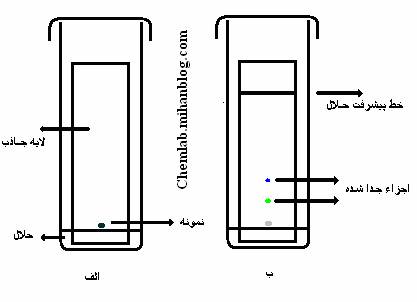
solid - liquid and principles such as chromatography columns. But in this case the object solid adsorbent as a thin layer on a piece of glass or sturdy plastic broadcast.A drop of the solution or the unknown sample is placed near the edge of the screen and the screen are placed in a container with a sufficient amount of solvent extraction.The amount of solvent should be enough to reach the spot just below the surface (Figure A). Solvent goes to the top and mix components at different speeds is gone.As a result of the spots may appear on the screen. These spots are on a line perpendicular to the surface of the solvent container ).


This chromatography is very easy and quickly done. This method is particularly useful for separating components of a mixture and also can be used to determine the best extraction solvent used for column chromatography. 

In TLC The solids that can be used in chromatography   Column will be used, and the silica and alumina is used. Consultants absorbent body with a small amount of preservative such as orthopedics plaster, calcium sulphate or starch are mixed to find the necessary adhesion absorbent body and stick to the list. Pages can be obtained before taking or plastic sheeting on the market is ready to be used.


One of the clear advantages of TLC It requires a very small amount of sample. In some cases up to 10 -9 g can be detected. The sample size may reach up to 500 micrograms. Drawing on the experience of countless examples can be used. The experience of different spots shave and wash with a suitable solvent (extract). And to identify (through spectroscopy) to use. 

Detection of color spots in the chromatogram is easy and there are several ways to locate a colorless bodies spots.For example, ultraviolet light radiation to the stain, fluorescence properties are determined combinations.Other methods include absorbent body with a fluorescent substance mixed with an inert else. When ultraviolet light shines on this page, the spots objects that absorb ultraviolet light, but no fluorescence properties of the fluorescent screen to appear dark. In many other cases, the detector Reagents others. Such indicators can be unraveled and stains appear on the chromatogram.Sulfuric acid, which many organic compounds into coal conversion and a solution of potassium permanganate Examples of detection reagents that are used in this way.Iodine is also introduced another detector is used. In this case the dose container is placed an environment saturated with iodine vapor. Many organic compounds absorb iodine, and their spots on the chromatogram of color (usually brown) information.


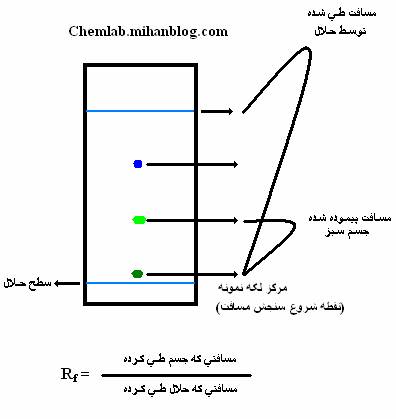
In certain circumstances speed combination to slow the progression of solvent (R f ) Certain properties of the composition. To determine the distance of the object from the starting line to the middle of the stain has come and measure the distance traveled by the solvent they split. This measure distances with the same starting line.

Uses


REFRENSE

WWW.JALILLBCHEORG2.BLOGFA.COM

جلسه دوم شناسایی الکلEN


ALCOHOLS

sodum test


Several methods are available for the analysis of the hydroxyl group, the functional group present in alcohols. Sodium metal undergoes reaction with hydroxyl groups of many alcohols to liberate hydrogen gas and form the salt of the alcohol. The rate is highly variable and depends upon the alcohol structure.


chemical properties

2ROH+2Na .... 2RONa+H2


physical properties


To 0.25 mL or 0.25 g of the sample, add small thin slices of freshly cut sodium until no more will dissolve. Evolution of hydrogen gas indicates the presence of acidic hydrogen, such as a hydroxyl group in an alcohol, hydrogen attached to the nitrogen in a primary or secondary amine, or a hydrogen in a terminal alkyne. Cool the solution, and observe. Add an equal volume of ether. Another positive test is the formation of the solid salt. Prior to testing, dry liquid samples with calcium sulfate. Any residual water will undergo reaction with the sodium. This test may be applied to solid compounds or very viscous liquids by dissolving them in an inert solvent such as anhydrous ligroin or toluene.

The order of reactivity of alcohols with sodium is known to decrease with increasing size of the alkyl portion of the molecule. This test is subject to many limitations, and the  results should be interpreted with caution. 

This test is most useful with alcohols of intermediate molecular weight, such as those containing from three to eight carbon atoms. Lower alcohols are difficult to obtain in anhydrous condition. The presence of traces of moisture causes the test to be positive. Alcohols of high molecular weight undergo reaction slowly with sodium, and the evolution of hydrogen gas is often so slow as to make the test of little value. Metallic sodium, when cut in moist air, adsorbs water on its surface so that, when placed in a perfectly dry solvent such as benzene, it gives off hydrogen gas produced by the interaction of the metal with the adsorbed moisture.


sodum test video

http://s9.picofile.com/file/8279435776/156149.mp4.html 


Another method of detecting such active hydrogen is by adding acetyl chloride to the alcohol to form the ester, which is less dense than the aqueous layer.

complication

2RNH2 + 2Na ..... 2RNH-Na+ + H2(g)

2R-C==C-H + 2Na  .... 2R-C==C-Na+ + H2(g)


ceric amonum test

MSDS of ceric amonum

https://www.google.com/webhp?sourceid=chrome-instant&ion=1&espv=2&ie=UTF-8#q=msds%20of%20ceric%20amonum

  • Another method of testing for the presence of the alcoholic hydrogen involves ceric ammonium nitrate. The yellow ceric ammonium nitrate forms a red organ metallic compound with alcohols. Positive results are obtained from alcohols of 10 or fewer carbons.
  • chemical properties


physical propertis


reagent

ceric amonum hexa nitrat


complication

lots of chemical material can be oxide and destroy the color of ceric amonum

 jones test


  •   The Jones oxidation, in conjunction with the sodium metal test and the Lucas    test, may be used to differentiate among primary (1), secondary (2°), and tertiary (3°) alcohols. The Jones oxidation. only detects the presence of a hydroxyl substituent that is on a carbon bearing at least one hydrogen. Thus, only primary and secondary alcohols are oxidized to the corresponding carboxylic acids and ketones. Tertiary alcohols are not oxidized under these conditions. As the alcohol is oxidized, the solution changes from an orange-red color from the Cr+6 ions, to a blue to green color from the Cr+ ion.
  • physical properties


chemical properties

 reagent


 cro3


(Hydrochloric AcidlZinc Chloride (Lucas Test

Substrates that easily give rise to cationic character at the carbon bearing the hydroxyl group undergo the Lucas test readily. Therefore, only secondary (2°) and tertiary (3°) alcohols form the alkyl halide, which appears as a second liquid layer, tertiary alcohols being the most reactive. Primary (1°) alcohols undergo reaction with the zinc chloride and hydrochloric acid either negligibly slowly or not at all.

chemical properties


To 0.2 mL or 0.2 g of the sample in a test tube add 2 mL of the Lucas reagent. Stopper the tube and shake; then allow the mixture to stand. Note the time required for the formation of the alkyl chloride, which appears as an insoluble layer or emulsion.

physical properties


mechanism

Lucas Reagent Dissolve 13.6 g (0.1 mole) of anhydrous zinc chloride in 10.5 g (0.1 mole) of concentrated hydrochloric acid, with cooling. Since the Lucas test depends on the appearance of the alkyl chloride as a second liquid phase, it is normally applicable only to alcohols that are soluble in the reagent. This limits the test in general to monofunctional alcohols lower than hexyl and certain polyfunctional molecules.

Tertiary alcohols react with concentrated hydrochloric acid so rapidly that the alkyl halide is visible within a few minutes at room temperature, first as a milky suspension and then as an oily layer. The acidity of the medium is increased by the addition of anhydrous zinc chloride, which is a strong Lewis acid, and, as a result, the reaction rate is increased. The high reactivity of tertiary alcohols is a consequence of the relatively great stability of the intermediate carbonation. Alkyl alcohol, although a primary alcohol, yields a carbonation that is relatively stable because its charge is distributed equally on the two terminal carbon atoms.


As a result, alkyl alcohol reacts rapidly with the Lucas reagent and the reaction is accompanied by the evolution of heat. Addition of ice water to the reaction results in the formation of the alkyl

chloride as a separate layer.

فیلم تست لوکاس و جونز در آدرس سایت زیر را مشاهده کنید.


 http://s8.picofile.com/file/8275449384/a_b69d75i7hhjjm066nk0jj086k3052l41lm081243521_7931d.mp4.html

refference

identification of organic compound/ sheriner


جلسه ششم و هفتم شناسایی امین ها و کربوکسیلیک اسید ها و امینواسید هاEN

Amines identification tests
PH aqueous solution and solubility test

If the combination is water-soluble, dissolving some of it in water, its aqueous solution prepared with pH indicator paper to see it. If you are amine compounds, alkaline and the pH is high. If not dissolve in water, soluble in ethanol - water or dioxane - water and high test done. Aliphatic amines first, second, third and first aromatic amines dissolved in a solution of 5% hydrochloric acid. A compound that is insoluble in water but dissolve in a solution of 5% hydrochloric acid, an amine

(Hynzbrg test (Hinsberg Test


In this test amines can be first, second and third are recognized. This test is based on the principle that the first and second amines with sulfonylureas Arne halides combined, produce sulfone amides N - Substituted that. The reaction products; sulfone hoping for a substitution (the first amine) and two polyamide sulfone substitution (a secondary amine) is. Sulfone substituent in the hope of a solution solubility, but two Substituted sulfone amide in solution can not be resolved, because the acidic hydrogen. So the reaction can not open salt (dissolved) form. The third non-hydrogenated amines and amino acids, so are reactive in these situations. These reactions are shown in the following figureNote: Some of the amines of sulfone amide, sodium salt are dissolved. This may be caused by the use of seiscondary amines instead of the first type is wrong

Hynzbrg Test Methods


1.0 ml of liquid amine (approximately 3 drops) or 1.0 g of solid amine and 2.0 ml of benzene sulfonylurea chloride (4 to 5 drops) and 5 ml of 10% sodium hydroxide solution in a small test tube molding, doors closed tube and shake it for 3 to 5 minutes. Then the door and removed the tube while you shake it for a minute by heat the steam bath. After cooling the tube and give it a try with litmus paper. If the environment is alkaline, more NaOH solution and pour, to be played. 1 to 2 ml of distilled water can help dilute it. If there is sediment or oil layer may be formed sulfone substituted polyamide two, and the desired amine is a secondary amine. Oil-bearing deposits with overflow layer or separated and concentrated HCl its solubility in check. (Sulfone amide two substituent in concentrated HCl is not.) If after layer of oily sediment or remain thin, with accuracy to the solution, HCl added concentrated with pH paper to check for acidity. If sediment builds up, because there is a single substituent is sulfone amide. The first type is unknown Amen. If the above is not observed, ie the reaction does not take place, due to the presence of a tertiary amine.


( Test aqueous solution of copper (ll) sulphate (Spot test


One of the easiest methods that can be used to identify amines, the use of copper (ll) sulfate is blue. It is adjacent to the amine reactions and often Components of the blue to bluish green


Components and thus create color because of the positive test


Amines react with copper (ll) sulfate can be written as follows


Physical properties: the creation of a blue complex

Chemical properties: the reaction


 Nitrous acid or nitrous acid test

Nitrous acid test (nitro acid) is used to identify the various amines. This reaction is the breakdown of amines in the form of reactions is shown below.
  Methods nitro acid test:
  About 50 mg of solid amine or 3 drops of liquid amine in 2 ml 3-normal hydrochloric acid (HCl ten percent can be used.) Solution and the solution in an ice bath to 0 ° C to 5 ° C twenty percent NaNO2 get about 5 drops of cold water to add it.

 Notes tests
 
A) the immediate withdrawal of gas is colorless, indicating the existence aliphatic amines first.
 
B) liquid or oil soluble yellow to orange because of an aromatic amine or aliphatic amine II. (Pale yellow or pale orange is due to the presence of secondary amines.)
 
C) If a solution is yellow, it indicates the existence of two substituted aniline which is substituted in the para position. Ten percent of sediment mixed with NaOH to neutralize the green color is obtained.
 
D) If the gas is colorless and yellow oil-soluble or not, there may be an aromatic amine first. In such cases, a few drops of cold reaction to a cold solution of 1.0 g of β - naphthol in 4 ml NaOH add ten percent. The orange to red due to the presence of aromatic amine is first.
 
E) If any of the reactions cited for not, in this case, probably with an aliphatic amine or aromatic amine-substituted in the para position is a third type that we face.
  4) rapid test copper (ll) sulphate:
One of the easiest methods that can be used to identify amines, the use of copper (ll) sulfate is blue. It is adjacent to the amine reactions and often Components of the blue to bluish green. Components and thus create color because of the positive test.
Identify carboxylic acid:

Physical properties

Immediate withdrawal of gas is colorless, indicating the existence aliphatic amines first.Liquid or oil   soluble yellow to orange because of an aromatic amine or secondary aliphatic amine

If the solution is yellow, it indicates the existence of two substituted aniline which is substituted in the para position. Ten percent of sediment mixed with NaOH to neutralize the green color is obtained

If not removed colorless and yellow oil-soluble or not, there may be an aromatic amine first. In such cases, a few drops of cold reaction to a cold solution of 1.0 g of β - naphthol in 4 ml NaOH add ten percent. The orangeto red due to the presence of aromatic amine is first.


CARBOXYLIC ACID TET
Neutralization equivalent (N.E) carboxylic acids because the acidity can be measured with a standard base and neutralize its equivalent calculated. The acid equivalent weight of neutral or acid molecular weight divided by the number of acid in the molecule, n, and on the other hand, if the number of neutralized carboxylic acid groups can be obtained by multiplying the molecular weight acids. 
It may be necessary for the complete solution of acid mixture to be heated. Ftalyyn Shnasagrfnvl acid by using sodium hydroxide solution with normality, you turned out to 1/0 the normal headline. Neutralization equivalent obtained from the following equation
 
Neutralization equivalent = 1000 * weight / volume consumer profit * profit normality
If the acid carboxyl group have a molecular weight acid is then neutralized equivalent. If 95% of ethanol as a solvent is used, the indicator does not show exactly phenolphthalein endpoint identifier should be used Bromothymol blue. Also, some acids can be a mixture of two solvents such as ethanol and benzene or toluene, ethanol and measure the volume of Dad.madl neutralized with approximately 1 ±% is calculated for common tasks. But if the sample is carefully purified and dried using the error can be a good way to 3/0 ±% decrease. If the amount of neutral theory does not match with the values ​​obtained, after complete drying volume was measured again.
Substituted aliphatic acids not run for a six-carbon molecule style Dvklaks used to determine fixed. Also for the characterization of esters which are derived from such acids are valuable, you can also obtain this acid hydrolysis of such ester.
 

refference

jodasazitarkibat.persioanblog.ir 

جلسه چهارم  شناسایی آلدهید ها و کتون ها EN


Aldehyde and ketone testing detected

Compounds that have carbonyl functional group are in, if the carbonyl group is substituted withhydrogen or alkyl groups, aldehyde (RCHO) or ketone (RCOR) are called. Chemistry of these compounds, the carbonyl functional group is chemistry. Identification of these compounds characterized by reactions of carbonyl functional group is possible.


To identify aldehydes and ketones are several tests that can be used to test 2 and 4 - D-nitro-phenyl hydrazine, chromic acid test, test Ydvfrm, Talnz test, test and test Fuschin Benedict cited.


Test 2 and 4 - D-nitro-phenyl hydrazine 

Aldehydes and ketones with the reagent 2 and 4 - D-nitro-phenyl hydrazine orange to red precipitate the day. The test for identifying aldehydes and ketones are used from other compounds. Aldehyde or ketone test if a law in which case you will tend towards the red the color of sediments. 

In the following reaction between a ketone and reagents 2 and 4 - D-nitro-phenyl hydrazine see

chemical  & physical properties


Preparation of reagents 2 and 4 - D-nitro-phenyl hydrazine


1 g 2 and 4 - D-nitro-phenyl hydrazine in 5 mL of concentrated sulfuric acid solution and the solution cautiously 7 ml of water and add 25 ml of 95% ethanol. After the solution is strongly

pressed, you remove it from the solids dissolved

MSDS of phenylhydrazine

www.sciencelab.com/msds.php?msdsId=9926503


  Question: 

If the aldehyde or ketone We have a conjugate structure with double bond or benzene ring is reddish orange color. Why

Among the high intensity of transmission electron transfer allowed *    only molecules that have an unsaturated double bonds that have been observed. When a combination is linked  can absorb photons ofUV-ViS area and it is being colored.


Identification Methods 

Two or three drops of the unknown liquid (05/0 grams of solid) in 2 ml of ethanol solution and a drop of reagent 2 and 4 - D-nitro-phenyl hydrazine to add it. Orange to red scale formation due to the presence of an aldehyde or ketone is. The presence of conjugated double bonds with the carbonyl group becomes reddish sediment.

Complications

Some ketones give oils which will not solidify

Some allylic alcohols are oxidized by the reagent to aldehydes and give a positive test

Some alcohols, if not purified, may contain aldehyde or ketone impurities

sodume bisulfit test

chemical properties


Uses of the reaction

The reaction is usually used during the purification of aldehydes (and any ketones that it works for). The addition compound can be split easily to regenerate the aldehyde or ketone by treating it with either dilute acid or dilute alkali.

physical properties

http://www.chemguide.co.uk/organicprops/carbonyls/addition.html

Talnz test or Tulns 

Talnz test (Tvlns) is another method for the detection of ketones and aldehydes to be used. Aldehydes react with reagents Talnz (Tulns) production of silver mirror in the wall of the test tube. 

In the following reaction was to test Talnz (Tulns) See

chemical properties 


Talnz reagent preparation method  

A solution of silver nitrate solution of 3 g water is available in 30 ml of solution B is 10% soda solution. Reagent should be used immediately after preparation. To prepare the reagent Talnz (Tvlns), one ml of solution A and solution B with a mill mix. Silver oxide precipitate is formed. Then add drops of concentrated ammonia solution, the deposition of silver oxide to be resolved. Reactive now ready for testing. 

In the following reactions related to the preparation of Talnz (Tvlns) See

chemical properties 


Note: Reactive Talnz (Tvlns) must be provided during use and the remainder is disposed of in the sink. If storage solution, the possibility of forming explosive Fulminating silver deposits there. The mixture of nitride deposition of silver (Ag 3 N) and silver azide (AgN 3) is. 

method  

5.0 ml of reagent Talnz (Tvlns) will add 3 drops or 1/0 gram of material unknown. A silver mirror or black deposits indicate that the test is positive. If you did not receive a response at room temperature, dissolved in a little warm water Human heat.


Tip 1: If you are not completely clean test tube, silver for silver mirror is not formed in the wall of the test tube, and for sediment or suspensions appear black.


Note 2: Some simple ketones such as acetone and methyl ethyl ketone respond to this test.

physical properties 


Tollens' test: left side positive (silver mirror), right side negative

talens test video

http://s8.picofile.com/file/8279223034/a_750p96h1i5jo2l8mnnl7n8p61nn2ln59m8901282797_b97c8.mp4.html

complication 

Reagents should not be heated in dye penetration test, and the test solution should be alkaline. When testing the unknown, it is a known aldehyde used as a control

The test tube must be clean and oil-free if a silver mirror is to be observed

Easily oxidized compounds give a positive test. For example: aromatic amine and some phenols

Fuchsin reagent or reagent preparation method 

5.0 g of pure dye penetration (Rvzanylyn hydrochloride) (rosaniline hydrochloride) in 500 ml of distilled water and straightened solution; 500 ml of distilled water with sulfur dioxide, saturated with dye thoroughly mixed and leave for one night. This method of production is colorless and sensitive.


In the figure below represents the structure or Rvzanylyn hydrochloride Fuschin see

chemical properties 


physical properties


method  

2 ml of reagent Fuschin - aldehyde in a test tube and add a drop of aldehyde being tested. See the color within a few minutes. (For example, Bvtanal purple-violet appear within 3 to 4 minutes.) It is recalled that should not be heated reagent. 

Benedict test 

Benedict reagent, a reagent labeled with the name of an American chemist (Stanley Rossiter Benedict) is. To identify aliphatic aldehydes (non-aromatic) no sulfur and alpha-hydroxy ketones are used. In the following reaction of an aldehyde and an alpha-hydroxy ketones by introducing see Benedict:

Benedict's Reagent MSDS

https://www.sciencelab.com/msds.php?msdsId=9925648

chemical properties 

physical properties 


Benedict reagent preparation method


173 g of sodium citrate and 100 g of anhydrous sodium carbonate in 800 ml of water and 850 ml by adding distilled water to give it volume. In another within 3/17 gram of copper sulfate and hydrated in 100 ml of water and the resulting solution while stirring citrate solution and add carbonate solution and the final volume by adding water to one liter daily.


Solid derivatives 

The aldehydes and ketones are two solid directly used, toxic derivative and derivative Karbazvn 2 and 4 - D is nitro-phenyl hydrazine. (Preparation of these derivatives was previously described.) To aldehydes and ketones derived oxime is prepared. 

Oxime derivatives and derivative toxic reaction Karbazvn you can see in the image below


refference

http://organic-compounds.persianblog.ir/

/


جلسه سوم شناسایی فنول ها و مشتق سازی الکل هاEN

ALCOHOLS

The most general derivatives of primary and secondary alcohols are the phenylurethanes and I-naphthylurethanes. Urethane derivatives are prepared when the alcohol is treated with either phenyl isocyanate or naphthyl isocyanate 

For water-soluble alcohols that are likely to contain traces of moisture, the 3,5dinitrobenzoates are generally more satisfactory as derivatives than the urethanes. The reaction of alcohols with 3-nitrophthalic anhydride produces hydrogen 3-nitrophthalate derivatives . 

Phenyl and 1-Naphthylurethanes of Alcohols and Phenols

chemical properties

Place I g of the anhydrous alcohol or phenol in a test tube, and add 0.5 mL of phenyl isocyanate or I-naphthyl isocyanate. Caution! The isocyanates are lachrymators and should be stored in desiccators. If the reactant is a phenol, catalyze the reaction by adding two to three drops of anhydrous pyridine or triethylamine. If a spontaneous reaction does not take place, stopper the solution loosely and warm it on a steam bath for 5 min. Cool the solution in a beaker of ice, and scratch the sides of the tube with a glass rod to induce crystallization. PUrify the urethane by dissolving it in 5 mL of petroleum ether or carbon tetrachloride (toxic). Filter the hot solution to remove the unwanted urea by-product, and cool the filtrate in an ice bath. Isolate the crystals byfiltration.

physical properties


complication 

Discussion The presence of water as an impurity in the alcohol causes difficulty in obtaining the urethane. Water hydrolyzes the isocyanates to give arylamines, which combine with the excess reagent to produce disubstituted ureas 

The ureas are higher melting and less soluble than the corresponding urethanes; and ureas, even in small amounts, make the isolation and purification of the urethanes a matter of considerable difficulty. For this reason, this procedure is most useful for alcohols that are insoluble in water and, therefore, easily obtained in anhydrous conditions.

Urethanes can be obtained from tertiary alcohols only with great difficulty. The isocyanates cause dehydration to occur with the formation of the alkene and diarylurea. 

Nitrobenzoates of Alcohols and Phenols; Benzoates of Phenol 

(a) With Pyridine Dissolve 1 mL or 1 g of the alcohol or phenol in 3 mL of anhydrous pyridine, and add

0.5 g of 4-nitrobenzoyl or benzoyl chloride. After the initial reaction has subsided, warm the mixture over low heat for a minute and pour, with vigorous stirring, into 10 mL of water. Allow the precipitate to settle, and decant ofT the supernatant liquid. Stir the residuewith5mL of5%sodiumcarbonatesolution. Removetheprecipitatebyfiltration, and purify by recrystallization from ethanol. 

(b) Without Pyridine Mix 1mLor 1g ofthe alcoholorphenolwith 0.5g of4-nitrobenzoylorbenzoyl chloride, and heat to boiling over low heat. Pour the mixture into 10 mL of water and pUrify as in )(a 

3.5Dinitrobenzoates of Alcohols and Phenols- 

chemical properties 


(a) With Pyridine Mix 0.5 g of 3,5-dinitrobenzoyl chloride with 1 mL or 0.8 g of the alcohol or phenol in a test tube. Add 4 mL of pyridine. Boil the mixture gently for 5 min. Add 10 mL of distilled water, and cool the solution in an ice bath until the product solidifies. Isolate the precipitate by filtration, wash with 10 mL of 2% sodium carbonate solution, and recrystallize from 5-10 mL of a mixture of ethyl alcohol and water of such composition that the ester will dissolve in the hot solution but will separate when the solution is cooled. Isolate the crystals by filtration and dry.

If 3,5-dinitrobenzoyl chloride is not available, it may be made by mixing 0.5 g of 3,5-dinitrobenzoic acid with 1 g of phosphorus pentachloride in a test tube. In the hood, warm the mixture gently to start the reaction. After the initial rapid reaction has subsided, heat the mixture for about 4 min at such a rate as to cause vigorous bubbling. Pour the hot liquid onto a watch glass, and allow to solidify. Isolate the solid material and use immediately for the preparation of the derivative as described above. 

(b) With Pyridine and Tosyl Chloride4 In a small flask, add 95 mg of 4-toluenesulfonyl chloride (tosyl chloride) to a mixture of106mgof3,5-dinitrobenzoicacid dissolvedin0.5 mL ofdry pyridine. Stirthe mixture vigorously and place in an ice bath. Once the mixture is cold, add 100 mg or 1 mL of the alcohol or phenol and stir the solution vigorously. Allow the mixture to cool in the ice bath for 10 min. 

Precipitate the alcohol derivatives by the addition of 2 mL of water. Isolate the product by suction filtration, wash with 1 mL of cold water, and recrystallize from ethanol.

Precipitate the phenol derivatives by the addition of 2 mL of 1 M sodium hydroxide solution. Isolate the derivative by vacuum filtration, and wash with 1 mL of cold water. Recrystallize the derivative by placing the product in 1 mL of bOiling water. and add enough N.N-dimethylformamide to dissolve the solid. After dissolution occurs, chill the solution to reprecipitate the crystals. Isolate the crystalsby suction filtration.

urethane with alcohol

chemical properties

PHENOL TEST

chemical properties


solvent

pyridin


 MSDS of feric choloride

https://www.sciencelab.com/msds.php?msdsId=9924033


The ferric chloride test is used to determine the presence or absence

of phenols in a given sample (for instance natural phenols in a plant extract). Enols, hydroxamic acids, oximes, and sulfinic acids give positive results as well. The bromine test is useful to confirm the result, although modern spectroscopic techniques (e.g. NMR and IR spectroscopy) are far superior in determining the identity of the unknown. The quantity of total phenols may be spectroscopically determined by the Folin-Ciocalteau assay.

physical properties


complication

 The sample is dissolved in water, or a mixture of water and ethanol, and a

few drops of dilute ferric chloride solution is added. The formation of a red, blue, green, or purple coloration indicates the presence of phenols. Where the sample is insoluble in water, it may be dissolved in dichloromethane with a small amount of pyridine.

The iron (III) chloride test for phenols is not completely reliable for acidic phenols, but can be administered by dissolving 15 mg of the unknown compound in 0.5 mL of water or water-alcoholmixture and add 1 to 2 dropsof 1% aqueous iron (III) chloride solution

phenol test video

http://sciencesourcevideo.com/video/detail/ferric-chloride-test-for-phenols

.


reference

https://en.wikipedia.org/wiki/Ferric_chloride_test

THE SYSTEMATIC IDENTIFICATION OF ORGANIC COMPOUND/SHERINER

http://academics.wellesley.edu/Chemistry/chem211lab/Orgo_Lab_Manual/Appendix/ClassificationTests/phenol_amine_nitro.html


جلسه اول تست های مقدماتیEN

solubility

Using the solubility chart in Figure determine the solubility of the unknown in water, ether, 5% hydrochloric acid, 5% sodium hydroxide solution, 5% sodium bicarbonate solution, and/or cold concentrated sulfuric acid. If the classification is doubtful, repeat the tests with control compounds that will give positive solubility tests and compounds that    will give negative solubility tests. Compare the results of these tests with your unknown. When testing the solubility of the compound in water, the reaction to litmus (or other indicator paper) and phenolphthalein of the solution  or suspension should be determin


alkali fusion 

Organic chemists do not usually use chemical tests for carbon, hydrogen, and oxygen. It is often valuable, however, to detennine the existence of other elements, such as nitrogen, sulfur, fluorine, chlorine, bromine, and iodine. The detection of these elements, by means of chemical tests, is usually straightforward. Many of these chemical tests are quite sensitive, so all aqueous solutions should be carefully prepared using only distilled or deionized water. Samples that show indications of explosive character in the ignition testshould not be analyzed by the sodium fusion procedure


safty glasses, with side sheild, must be wom at all times when any procedure or experiment is being conducted. The safety of other members of the class must be taken into account and therefore care must be taken so that reaction flasks are not pointed toward others in the lab .               

sulfuR


Sulfur Use either of the following procedures to test for   the presence of sulfur.

Procedure (a) for Sulfur Acidify 1 mL of the sodium fusion nitrate with acetic acid. Add two drops of 1% lead acetate solution. A black precipitate of lead sulfide indicates the presence of sulfur in the unknown.


Procedure (b) for Sulfur Add 2 drops of 2% sodium nitroprusside  to 1 mL of the sodium fusion filtrate. A deep blue-violet color         indicates the presence of sulfur

Na2S + Na2Fe (CN) 5NO....  Na14 [Fe (CN) 5NOS] + 2NaOH

Nitrogen 

Procedure (a) for Nitrogen In a small test tube, combine 1 mL of 1.5% 4-nitrobenzaldehyde in 2-methoxyethanol solution, 1 mL of 1.7% 1,2-dinitrobenzene in 2-methoxyethanol solution, and two drops of 2% sodium hydroxide solution. Add two drops of the sodium fusion filtrate. A positive test for nitrogen is the appearance of a deep-blue-purple compound. The deep-purple compound is due to a dianion produced when sodium cyanide, which is formed from nitrogen in the original compound, undergoes reaction with 4-nitrobenzaldehyde and 1, 2-dinitrobenzene


A yellow or tan solution is a negative test. This test for nitrogen is more sensitive than the Prussian blue test described in the fifth or earlier editions of this text

This test is valid in the presence of NaX (X = halogen) or Na2S; in other words, it is reliable even if the original unknown also contains halogen or sulfur. The products of the above reactions provide the explanation as to why this test is especially sensitive. Acidification of the solution of the purple dianion results in a yellow solution of 2-nitrophenylhydroxylamine (an acid-base indicator).


Procedure (b) for Nitrogen Add two drops of a 10% ammonium polysulfide solution to 2 mL of the sodium fusion filtrate, and evaporate the mixture to dryness in a steam bath or hot-water bath. Add 5 mL of a 5% hydrochloric acid solution, and warm the solution. Filter the solution. Add three drops of 5% ferric chloride solution to the filtrate. The presence of a red color indicates that nitrogen was present in the original unknown.

NaCN + (NH4)2Sx  NaSCN + (NH4hSx-l

6NaSCN + FeCl3 Na3Fe(SCN)6 + 3NaCI

Halogen

Halogens Use the tests listed below to check for the presence and identity of halogens. Use the data from these tests, in conjunction with the classification tests of ethanolic silver nitrate (Experiment 35) and sodium iodide (Experiment 36), to determine the specific halogen and whether the halogen is primary, secondary, tertiary, or aromatic

Unless otherwise stated, determine the acidity of a solution by placing a drop, with a stirring rod, of the solution on red or blue litmus paper. The solution is acidic when the litmus paper turns red and basic when the litmus paper turns blue.

Procedure (a) for Presence of a Halogen Beilstein's test is a very general test to see if any halogen is present. For this test, make a small loop in the end of a copper wire and heat the wire with the Bunsen burner until the flame is no longer green. Cool the wire. Dip the loop in a little of the original unknown compound and heat it in the edge of the flame. A green flame indicates halogen and is not sustained for very long.

This test is extremely sensitive but should always be cross-checked by the silver nitrate test described below because minute traces of impurities containing halogen may produce a green flame. Another drawback of this test is the possibility of highly volatile liquids evaporating completely prior to the wire becoming sufficiently hot to cause decomposition, thus resulting in a possible false-negative result.

Also, certain nitrogen compounds not containing halogen cause a green color to be imparted to the flame; among them are quinoline and pyridine derivatives, nitrogencontaining organic acids, urea, and copper cyanide. Some inorganic compounds also give green flames.

Na2S + 2HN03  H2S + 2NaN03

NaCN + HN03  HCN + NaN03

Cool the solution. If any precipitation occurs at this point, filter the solution. Add three drops of 0.1 M silver nitrate solution to the liquid. An immediate heavy formation of a solid indicates the presence of chlorine, bromine, or iodine. Silver chloride is white, silver bromide is pale yellow, and silver iodide is yellow. Since silver fluoride is soluble in water, it cannot be detected by this test. If only a faint turbidity is produced, it is probably due

NaCI + AgN03..... AgCI(s) + NaN03

NaBr + AgN03..... AgBr(s) + NaN03

NaI + AgN03  .....AgI(s) + NaN03

  If a silver halide is present, then continue to add         sufficient 0.1 M silver nitrate until precipitation ceases. Isolate the precipitate by filtration

Silver chloride, silver bromide, and silver iodide have different solubilities in 5% ammonium hydroxide. Add 2 mL of 5% ammonium hydroxide to the solid. Silver chloride is soluble in ammonium hydroxide due to the formation of Ag(NH3hCI. Silver bromide is slightly soluble because it only partially forms its salt. Silver iodide does not undergo reaction with the ammonium hydroxide and thus remains insolub

AgCI + 2NH40H Ag (NH3)+ CI-(aq) + 2H20


Ignition test


Place a 1O-mg sample of the substance in a porcelain crucible lid (or any piece of porcelain) and bring the sample to the edge of a flame to determine flammability. Heat the sample gently over a low flame, behind a safety shield. Heat the sample until ignition has occurred. Note (1) the flammability and nature of the flame (is the compound explosive?); (2) whether the compound is a solid, whether it melts, and the manner of its melting; (3) the odor of the gases or vapors evolved (caution!); and (4) the residue left after ignition. Will it fuse? If residue is left, allow the lid to cool. Add a drop of distilled water. Test the solution with litmus paper. Add a drop of 10% hydrochloric acid. Note whether a gas evolves. Perform a flame test, with a platinum wire, on the hydrochloric acid solution to determine the metal present


complication 

Many liquids burn with a characteristic flame that assists in determining the nature of the compound. Thus, an aromatic hydrocarbon (which has a relatively high carbon content) burns with a yellow, sooty flame. AliphatiC hydrocarbons burn with flames that are yellow but much less sooty. As the oxygen content of the compound increases, the flame becomes more and more clear (blue). If the substance is flammable, the usual precautions must be taken in subsequent manipulation of the compound. This test also shows whether the melting point of a solid should be taken and indicates whether the solid is explosive

If an inorganic residuel is left after ignition, it should be examined for metallic elements. A few simple tests will often determine the nature of the metal presentif the flame test indicates sodium, a sample of the compound should be ignited on a platinum

    foilinstead of a porcelain crucible cover

the systematic identification of organic compound/sheriner